Where Atlassian Rovo Fits in Jira Delivery Work
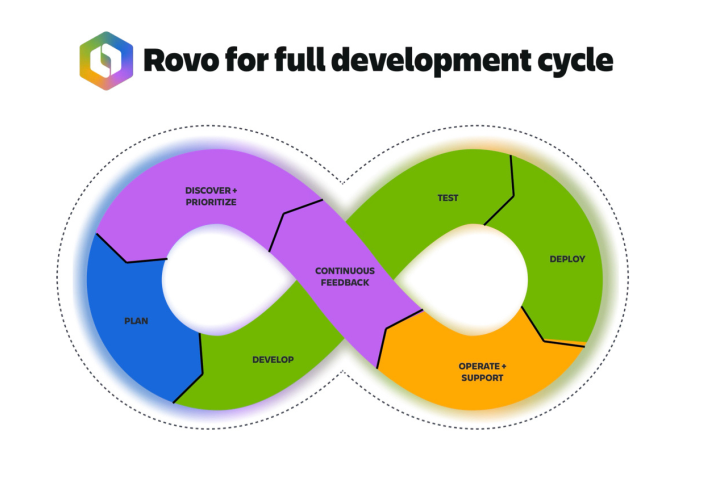

Key Takeaways
- Start with workflow friction: Rovo is most useful where teams lose time to search, handoffs, and repeated setup work.
- Treat output as assistance, not authority: summaries, issue drafts, and recommendations still need human review.
- Pilot narrowly first: bounded use cases usually create better adoption than broad AI rollouts.
Most teams evaluating Rovo are not asking whether AI is interesting. They are asking where it actually helps inside day-to-day Jira delivery work. That is the right question. In practice, the value rarely comes from replacing professional judgment. It comes from reducing context-switching, making knowledge easier to recover, and improving the repetitive preparation work that slows teams down.
In our workflow reviews, the first useful signal is usually not "Can this do everything?" It is "Where do people keep losing time to search, handoffs, and repeated summarization?" That is where Rovo tends to become most practical.
Where Rovo Usually Helps First
Teams often see early value in a small set of recurring delivery tasks.
- Context recovery: finding the relevant issue history, documentation, and prior decisions without opening five different tabs.
- Issue preparation: turning rough notes into cleaner issue descriptions, summaries, or acceptance-criteria drafts that humans can refine.
- Status and handoff support: helping product, support, and delivery teams summarize progress or outstanding work more consistently.
That is a better starting point than expecting an AI tool to become a full delivery strategy on its own.
Why Jira Teams Notice The Difference
Jira environments accumulate a lot of operational friction over time. Important details live in issue comments, linked pages, service requests, project notes, and app-specific workflows. Even capable teams lose time reconstructing context that technically already exists.
Rovo is most useful when it helps teams pull that context together more quickly. For delivery leads, that can mean faster backlog understanding. For service teams, it can mean less manual searching before triage. For project teams, it can mean cleaner transitions between planning, execution, and reporting.
What Still Requires Human Judgment
Rovo can improve how work is prepared and surfaced, but it should not be treated as a substitute for architectural, delivery, or compliance decisions.
- Acceptance criteria still need review: generated drafts can help, but they do not remove the need for product and engineering alignment.
- Test strategy still needs ownership: AI assistance may speed up preparation, but coverage and risk decisions still belong to the team.
- Operational controls still matter: permissions, knowledge boundaries, and regulated workflows need to be validated before wider rollout.
The healthiest implementations treat Rovo as an accelerator for known workflows, not as a reason to skip review.
How To Pilot It Without Creating Noise
The easiest way to get the wrong result from AI tooling is to deploy it everywhere before the team has a clear use case.
- Choose one bounded workflow: backlog prep, service triage, or internal knowledge search are usually better pilot areas than a full end-to-end rollout.
- Define what "better" means: faster context gathering, cleaner issue preparation, or fewer manual handoff steps are all measurable enough to review.
- Keep a human owner close to the pilot: someone should actively review output quality, edge cases, and team adoption instead of assuming the tool will self-correct.
In our implementation work, smaller, role-specific pilots usually create more durable adoption than broad AI announcements.
Where AtlasOptima Usually Sees The Best Fit
Rovo tends to make the most sense in environments where teams are already carrying real coordination overhead: busy Jira projects, service operations with repeated triage patterns, or delivery teams that spend too much time reconstructing context before they can act. If you are still on Data Center, the prior question is which of these capabilities you can reach at all — the AI features that are Cloud-only today are the ones that affect migration timing.
That is also why the best evaluation question is rarely "Should we use AI?" It is usually "Which parts of delivery are losing time to context, coordination, and repeated setup work?" Once that answer is clearer, the right pilot is usually clearer too.
Treat Rovo As A Workflow Decision, Not Just A Feature
Rovo is easiest to evaluate when it is tied to a real operating problem. If the issue is noisy triage, fragmented knowledge, or repetitive issue preparation, the value case becomes concrete. If the plan is just to "add AI," the results are usually less convincing.
That is why the most productive starting point is a workflow review. Understand where Jira teams are losing time today, then test whether Rovo improves that specific motion.
Explore Where Rovo Fits
If you want to evaluate Rovo against your real Jira workflows rather than a generic AI story, we can help you review where it is likely to add value and where it still needs guardrails.
Schedule WalkthroughWant the next practical update without watching the blog?
Join the AtlasOptima Dispatch for new articles, key deadline updates, and related resources worth reading when Atlassian decisions get time-sensitive.
Practical Atlassian migration and optimization notes. Email only. No filler.